Replacing SAP with Custom ERP: Strategic Guide & Alternatives for Swiss Companies
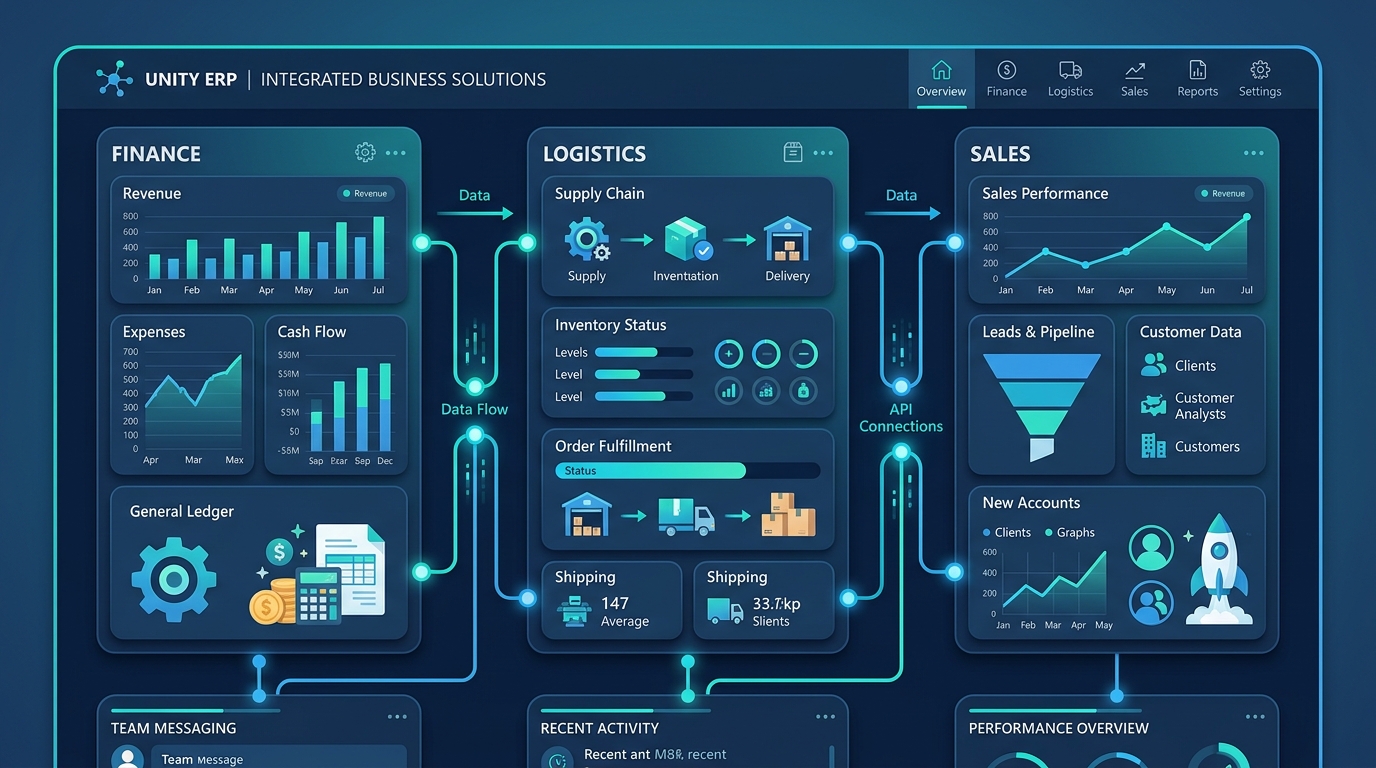
Replacing a legacy SAP infrastructure with bespoke software or an orchestrated Composable ERP architecture is one of the most critical decisions for Swiss mid-market and enterprise leadership. As the official 2027 deadline for SAP ECC (R/3) support looms and migration programs like RISE with SAP demand massive capital commitments, C-level executives face a crossroads: commit millions to a rigid vendor roadmap or achieve true technological autonomy.
Why Swiss Companies Are Evaluating an Exit from SAP
For decades, SAP was considered the unquestioned standard. However, the economic and operational landscape has fundamentally shifted:
- Vendor Lock-in & Forced Cloud Transition: By phasing out on-premise deployments, SAP enforces subscription cloud models with perpetual price hikes. Many Swiss firms refuse to relinquish control of their mission-critical processes to global hyperscaler clouds.
- Rigidity vs. Competitive Edge: Global SAP standards force organizations to conform their workflows to the software. For Swiss companies whose distinct edge lies in precision, speed, and bespoke client service, standardizing means compromising differentiation.
- Massive Migration Budgets: Transitioning to S/4HANA often mirrors a complete re-implementation, tying up internal key personnel for years and generating astronomical external consulting bills.
Strategic Question for Swiss Leadership: Does the recurring cost of a standardized global suite justify the loss of workflow agility, or does a tailored Swiss software architecture yield a substantially higher strategic ROI?
Strategic Benefits of Custom ERP Development
Adopting custom software development or a modular enterprise platform provides distinct competitive advantages:
- Complete Independence: Zero recurring per-user licensing fees, freedom from forced release schedules, and full intellectual property ownership.
- 100% Process Alignment: Software built around your proprietary engineering, logistics, and trading processes, operated via high-speed, intuitive web interfaces.
- Agile Innovation: New business units, partner APIs, or enterprise AI automations can be delivered in weeks rather than delayed across multi-month change request cycles.
- 100% Swiss Hosting & Data Sovereign: Hosted in Swiss data centers (ISO 27001 certified), in full compliance with the revised Swiss Federal Act on Data Protection (revDSG/FADP).
Key Challenges: Unique Swiss Regulatory Requirements
Operating an ERP in Switzerland requires deep adherence to local fiscal and regulatory standards:
- ISO 20022 Payments & QR-Bill: Comprehensive support for Swiss QR-bills (QR-IBAN, creditor references) alongside automated ingestion of pain.001 credit transfers and camt.053 / camt.054 bank statements.
- Swiss VAT (MWST): Seamless accounting under effective or flat tax rates (8.1%, 2.6%, 3.8%) and quarterly FTA filing automation.
- Swissdec 5.0 Certified Payroll: Complex cantonal withholding taxes, UVG, KTG, and BVG reporting make in-house payroll development inefficient, requiring tight integration with specialized Swiss payroll engines.
- Multilingualism (4 Languages): Native multi-language capability (DE, FR, IT, EN) across user interfaces, commercial documentation, and product catalogs.
- Local Subsystems & Customs: Seamless integrations with Swiss Post APIs, Swiss banking networks (EBICS), and digital customs clearance (Passar / e-dec).
The Strategic Solution: Composable ERP Architecture
Rather than attempting a risky "big-bang" custom rebuild of foundational accounting functions, Suisse IT GmbH advises Swiss mid-market firms to adopt a Composable ERP approach:
| Architecture Model | Description | Advantage for Swiss Firms | Recommendation |
|---|---|---|---|
| Monolith (SAP S/4HANA) | All-in-one cloud suite (RISE with SAP). Global standardized workflows. | Standardization, global corporate reporting. | Conglomerates |
| Composable ERP (Hybrid) | Proven Swiss standard for Finance/HR (e.g., Abacus) + custom software for core value streams. | Zero compliance risk on payroll/tax; 100% process fit on differentiating workflows. | Best Choice for KMU |
| 100% In-House Build | Rebuilding every component from scratch. | Total independence, but immense development costs and recurring regulatory maintenance. | Specialized Cases |
Under the Composable ERP paradigm, statutory Swiss accounting and payroll remain on a reliable, certified engine, while production, scheduling, logistics, and partner portals are engineered as modular modern web applications integrated via secure REST and GraphQL APIs.
10-Year TCO: Uncovering the Real Economics
Evaluating only the initial build cost of custom software against entry-level SAP licenses is misleading. Over a decade:
- Ongoing SAP Costs: Compounding 18–22% annual maintenance fees, mandatory platform upgrades, premium external consultants, and unexpected indirect access licensing penalties.
- Custom & Composable ERP: Upfront investment in architecture and UX engineering is rapidly offset by zero per-seat user fees and drastically lower maintenance overhead.
Readiness Checklist: Is Your Organization Ready to Exit SAP?
Assess these five key criteria before initiating your roadmap:
- 1. Workflow Differentiation: Do your core operational flows provide a competitive moat that standard SAP cannot handle without costly customizations?
- 2. Data Sovereignty: Does your risk policy require data residency strictly within Swiss borders under the revised FADP?
- 3. API Architecture: Do you have an integration-first strategy for connecting operational subsystems and banking partners?
- 4. Finance & Statutory Strategy: Have you decided whether accounting and payroll will leverage a certified Swiss engine or custom APIs?
- 5. Engineering Partner: Do you have an established Swiss software partner certified in ISO 27001 with proven expertise in enterprise architectures?
Frequently Asked Questions (FAQ)
When does official support for SAP ECC 6.0 end in Switzerland?
Mainstream support ends December 31, 2027. Extended support through 2030 carries substantial cost penalties, making timely planning imperative.
Which Swiss regulations are mandatory for an enterprise ERP?
Key standards include Swiss ISO 20022 payments (QR-bill), FTA VAT conformity, Swissdec 5.0 payroll compliance, multilingual support, and adherence to the revised Swiss Data Protection Act (revDSG).
Why choose Composable ERP over a full greenfield rebuild?
Composable ERP eliminates compliance and maintenance overhead for standard tax and payroll workflows while granting 100% freedom to tailor competitive operational processes.
Is a custom solution more cost-efficient than migrating to S/4HANA?
Yes. By eliminating perpetual user licensing, mandatory upgrade projects, and vendor lock-in, the 10-year Total Cost of Ownership is significantly lower.
Strategic ERP Advisory for Swiss Enterprises
Planning to modernize or modularly replace your enterprise ERP environment? The software architects at Suisse IT GmbH guide you from initial feasibility audits to full Composable architecture delivery — 100% Swiss Made and data-sovereign.
Request a Confidential Strategy Consultation →